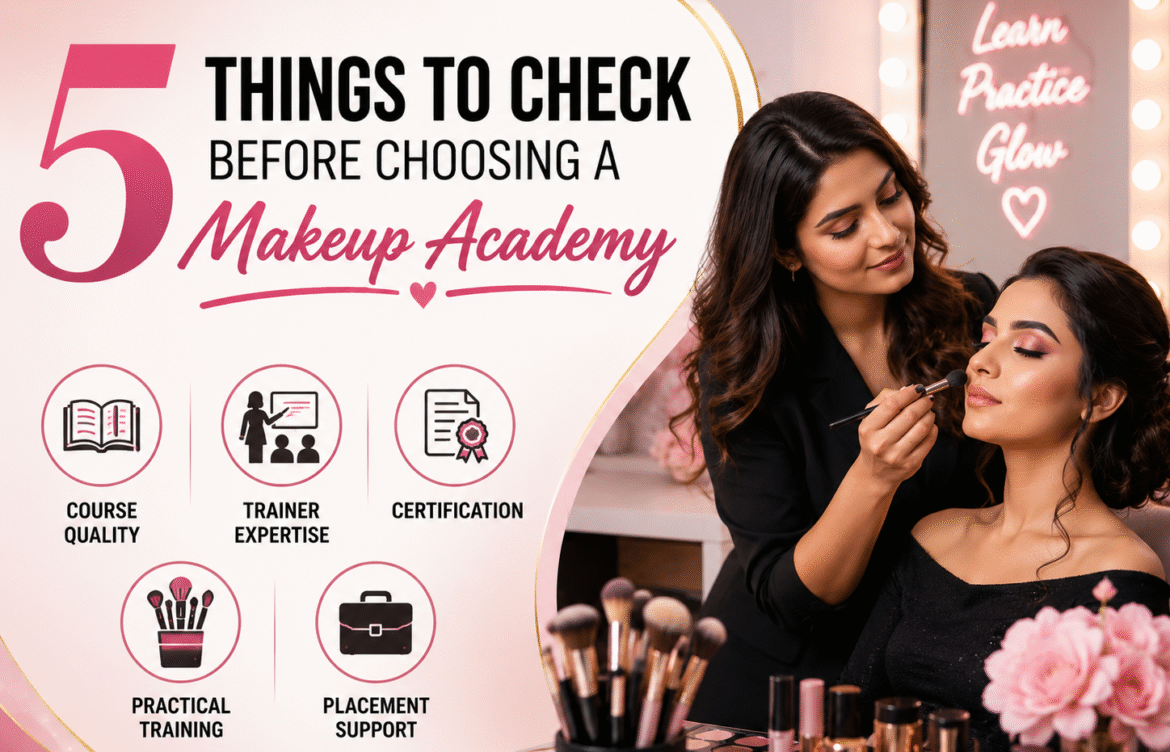
5 Things to Check Before Choosing a Makeup Academy
Making a choice of a make up academy can be thrilling particularly when you have determined to make it an actual skill. Maybe you’ve seen gorgeous bridal styles on the internet, and you’ve thought, “I want to do that too.”
However, picking an academy is not just about gazing at lovely make-up pictures or the cheapest course price. How much you really learn depends on the trainer, the practical experience, the content of the course and the environment you learn in.
If you are looking to become a professional makeup artist, freelancing or just enhancing your skills, spend a bit of time before you sign up. Before you select a makeup academy in Meerut, the following 5 things are important to consider.
1. Check the Experience of the Makeup Trainer
The person teaching you matters just as much as the academy itself.
Before joining, find out who will conduct your classes. Look at the trainer’s professional experience and, if possible, see some of their actual work.
A good makeup trainer shouldn’t only know how to create a beautiful look. They should also know how to teach the technique clearly.
For example, if you ask why a particular foundation is being used for dry skin, the trainer should be able to explain the reason. Understanding these small details helps you become independent instead of simply copying someone.
So, don’t hesitate to ask questions before you pay the course fees.
2. Make Sure There Is Enough Practical Training
This is one of the biggest things beginners should check.
You can watch hundreds of makeup tutorials online, but watching a video and working on a real face are completely different experiences.
Ask the academy:
- How many practical classes are included?
- Will students work on real models?
- Will different skin types be covered?
- Will students practise bridal and party makeup?
- Will the trainer personally correct mistakes?
Regular practice helps you understand blending, base preparation, eye makeup, contouring, colour correction, and other techniques much better.
And honestly, making mistakes during practice is not a bad thing. Your eyeliner might go wrong. Your foundation might look too heavy. Your eyeshadow may not blend properly.
That’s exactly when a good trainer can step in and show you how to improve.
3. Check the Complete Course Syllabus
Avoid selecting a course because it is called a “professional” course.
Request the entire syllabus and thoroughly read through it.
When thinking of taking a Makeup Artist, see if the topics are the same as what you want to learn.
Depending on your goals, the course may include:
- Basic makeup techniques
- Skin preparation
- Foundation and base selection
- Colour correction
- Eye makeup
- Contouring and highlighting
- Bridal makeup
- Party makeup
- Product knowledge
- Makeup tools and brush usage
- Hygiene and client preparation
- Basic hairstyle techniques
Also check the course duration. A very short course may be suitable for learning basics, while someone planning a professional career may need more detailed practical training.
Knowing exactly what is included will help you avoid disappointment later.

4. Look at Student Work
Here’s a simple tip that many people overlook: look at the students’ work, not only the trainer’s work.
An academy may show amazing bridal photographs on its website or social media. But those pictures may be created by experienced artists.
Ask to see examples of work created by students during their training.
You don’t need to expect perfection. In fact, it’s normal for a beginner’s first attempts to look very different from their final work.
What you want to see is improvement.
Also, don’t judge makeup only from heavily edited photographs. Filters, lighting, and photo editing can change the appearance of makeup.
If possible, look for natural photographs or videos of actual student practice.
5. Ask About Guidance After the Course
Finishing your classes doesn’t necessarily mean you’ll immediately feel ready for every client.
Once you start working, you may have plenty of questions.
What should you do with very dry skin? How can makeup last longer? Which products are better for bridal clients? How should you prepare for your first paid booking?
That’s why post-course guidance can be valuable.
Before joining, ask whether the academy provides any support after completion. This could include portfolio guidance, practice advice, career suggestions, or help with common client-related questions.
Even simple guidance can make a new makeup artist feel much more confident.
Final Thoughts
The right academy isn’t necessarily the most costly one or the one with the most followers on social media.
It’s about a space you can learn in, practice in, don’t feel embarrassed to ask questions and improve in.
We at Saheli Bridal Point believe that makeup should be taught the right way and by doing it, instead of just memorising the steps. All faces are unique and clients can have different needs.
Therefore, if you are considering enrollment, don’t rush into it, ask questions and compare your options.
You can have a certificate, but it’s what you know and how confident you are that will advance your career as a makeup artist.
Read Also: How to Get a Natural and Elegant Engagement Makeup Look